
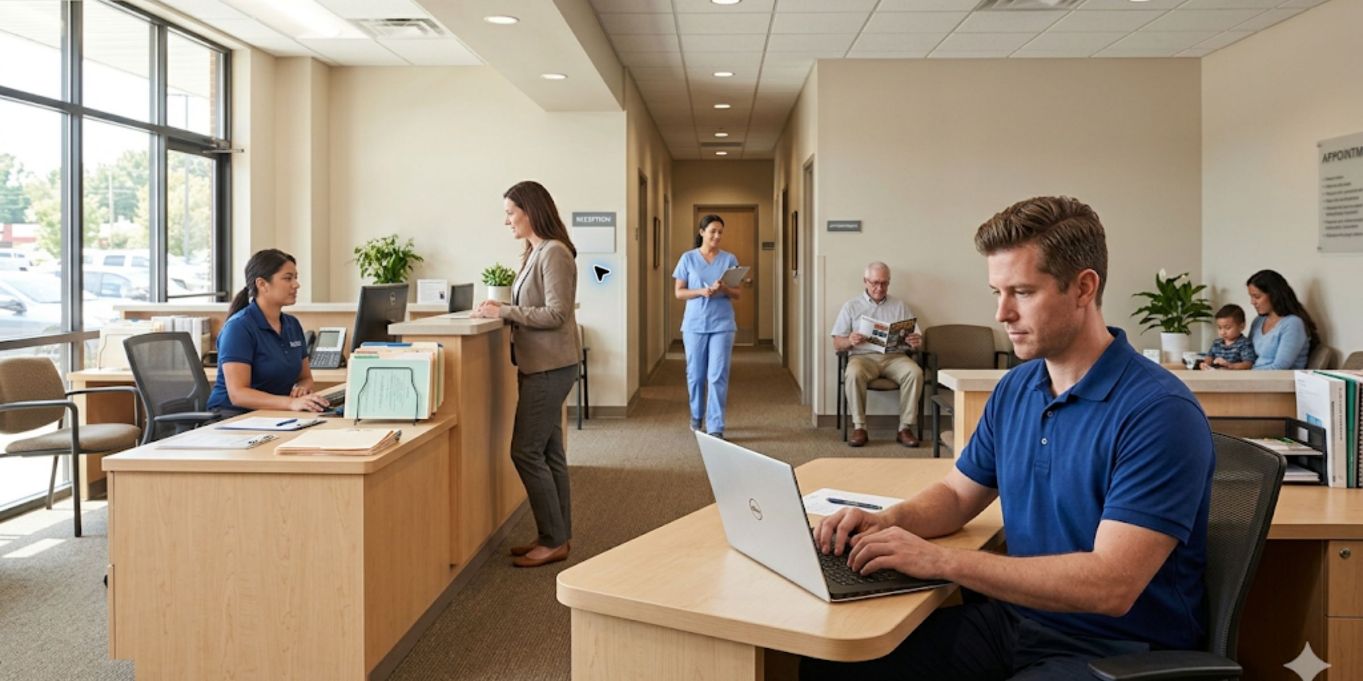
Healthcare

Healthcare Industry

Healthcare Onsite IT Support

Cartennas provides on-demand onsite IT support for healthcare clinics, medical offices, and distributed healthcare organizations that need reliable hands-on technical work completed at the location.

Healthcare environments depend on technology that works at the front desk, at workstations, and throughout daily operations. When a printer fails, a scanner stops working, a workstation needs to be replaced, or network equipment requires onsite attention, the issue affects more than IT. It can slow staff, interrupt workflows, and create unnecessary disruption across the location.

Cartennas helps healthcare teams get qualified technicians onsite for break/fix support, device swaps, Smart Hands, rollout work, network equipment support, and other field service tasks that cannot be completed remotely.

Healthcare support fit

  • Location Types Clinics, medical offices, outpatient locations, administrative healthcare offices, and distributed healthcare sites
  • Common Work Device swaps, printers, scanners, workstations, network equipment, cabling-related tasks, and guided Smart Hands visits
  • Operating Need Dependable onsite execution across one location or many without expanding internal field coverage market by market

Why Healthcare Needs Reliable Onsite IT Support

Healthcare organizations often support multiple locations, uneven demand across markets, and technology that must work consistently in active care and office environments.

Downtime Affects Daily Operations

When location technology fails, staff workflows can slow quickly. That makes fast, dependable onsite support especially important in healthcare settings.

Not Every Site Needs the Same Coverage

Some clinics and offices need frequent onsite help. Others need occasional dispatch. Healthcare teams need a model that can flex by location.

Multi-Site Coordination Gets Complex

Refreshes, device replacements, site projects, and rollout work can span multiple healthcare locations. Managing separate local providers adds friction and inconsistency.

What Cartennas Supports in Healthcare Environments

Cartennas supports the hands-on technical work healthcare teams need completed onsite, from everyday device issues to broader multi-location field projects.

Device Installations and Swaps

Onsite support for workstations, printers, scanners, peripherals, and other location hardware that needs to be installed, replaced, reconnected, or refreshed.

Break/Fix Support

Physical troubleshooting and onsite resolution for day-to-day technology issues that remote teams cannot finish from a distance.

Network Equipment Support

Router, switch, firewall, wireless, and local connectivity-related support that requires a technician at the healthcare location.

Smart Hands for Remote IT Teams

Guided onsite support for hardware handling, cable moves, equipment checks, visual verification, and other field tasks directed by your remote IT team.

Rollouts and Site Projects

Onsite execution for refreshes, openings, relocations, and multi-location projects that need a more consistent field delivery model.

Common Healthcare Use Cases

Healthcare teams use Cartennas when physical technical work must be completed at the site and dependable execution matters.

Clinic and Office Break/Fix

Get onsite help when workstations, printers, scanners, peripherals, or other everyday location technology needs hands-on troubleshooting or replacement.

Hardware Refresh Activity

Support planned replacement work across one healthcare site or many, including endpoint swaps and related onsite setup tasks.

Guided Smart Hands Visits

Extend the reach of your internal IT team when a technician is needed onsite to perform directed physical tasks or validate local conditions.

Network and Connectivity Tasks

Complete onsite work tied to routers, switches, firewalls, wireless hardware, patching, and other local infrastructure components.

Openings, Moves, and Site Changes

Add field support for new healthcare locations, office moves, scheduled upgrades, and other physical technology work tied to location changes.

Multi-Location Rollouts

Execute projects across distributed clinics or offices with one field services partner instead of coordinating each market separately.

Why Healthcare Teams Choose Cartennas

Cartennas gives healthcare organizations a practical way to handle onsite field work with better consistency and less operational friction.

  • On-demand onsite support across one location or many
  • Less reliance on fragmented local vendor coverage
  • Better alignment to uneven demand across sites
  • Support for both day-to-day issues and planned project work
  • Practical extension of internal IT teams
  • More consistent service delivery across distributed operations
  • Support for clinics, offices, and broader healthcare footprints
  • Field execution without building a larger permanent team

Why this model works

Healthcare organizations often do not need the same level of onsite support in every market. Cartennas helps you add field coverage where it is needed without carrying more full-time field overhead than the work justifies.

How Cartennas Supports Healthcare Locations

Cartennas gives healthcare teams a straightforward path from service request to onsite execution across one site or a broader footprint.

Step 1

Define the Need

Share the location, issue, task, scheduling needs, and any site-specific details required for the visit.

Step 2

Dispatch the Work

Cartennas coordinates qualified technician coverage based on the service need, timing, and healthcare location.

Step 3

Complete Onsite Execution

The technician performs the work onsite so your team can keep operations moving while the physical task is handled in the field.

Need Onsite IT Support for Healthcare Locations?

Talk with Cartennas about your healthcare footprint, service needs, and onsite support requirements. We help clinics, medical offices, and distributed healthcare organizations handle break/fix work, device replacements, Smart Hands requests, network equipment support, and rollout projects with a more flexible field services model.

Good fit for single-location healthcare offices, regional clinic groups, distributed medical operations, scheduled refresh work, and multi-location onsite support needs.