Product identity
Manufacturer SKU, MPN, and model information
Use the manufacturer’s SKU, MPN, model identifier, or configuration code to match the exact equipment and variant.
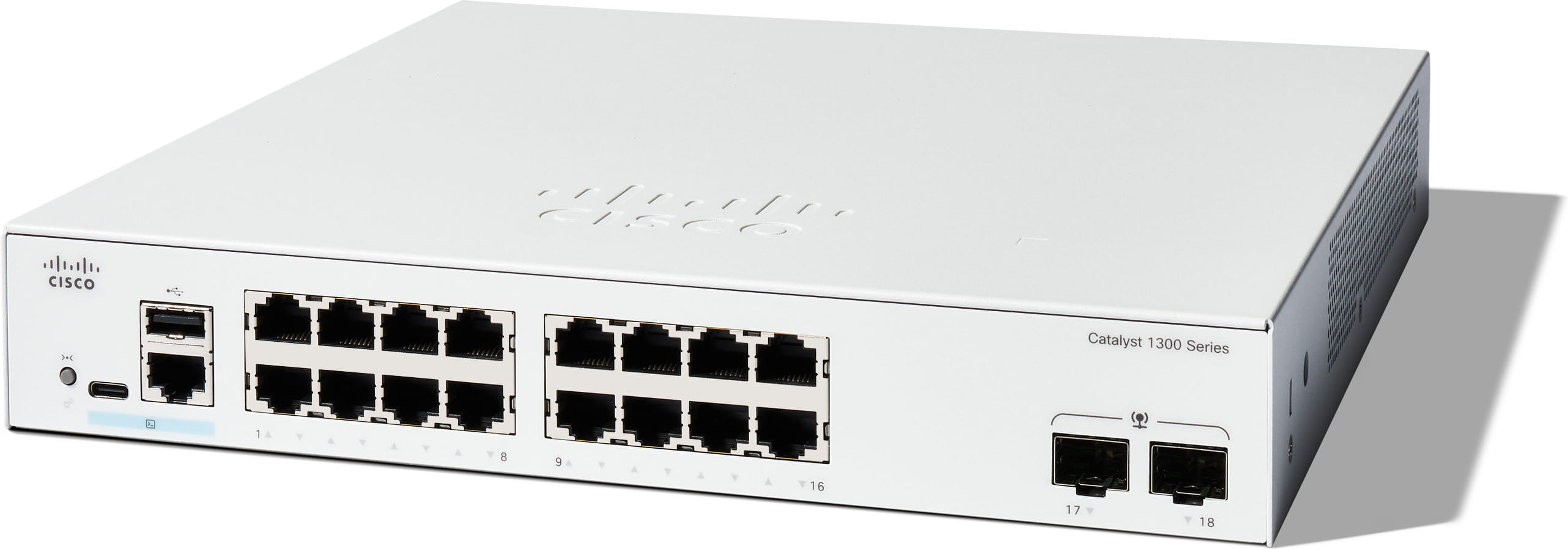
Cisco Catalyst 9200 24-port PoE+ Switch, Network Essentials (C9200-24P-E)
- Manufacturer identifier
- C9200-24P-E
- Variant
- 24-port 1GbE PoE+; modular uplinks; Network Essentials
- Region
- US
- Verified
- Official source
- Manufacturer verification
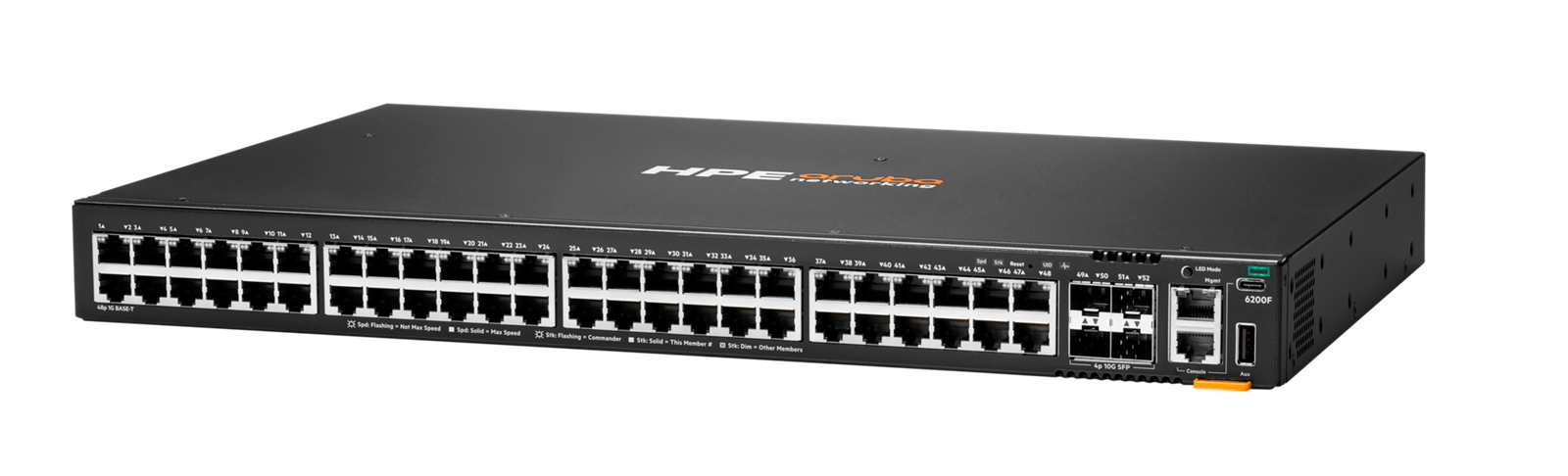
HPE Aruba Networking CX 6100 12G Class 4 PoE 139W Switch (JL679A)
- Manufacturer identifier
- JL679A
- Variant
- 12G Class 4 PoE, 2G copper, 2SFP+ uplinks, 139W, fanless
- Region
- US
- Verified
- Official source
- Manufacturer verification
Start by comparing the actual configurations
A comparison between the C9200 and CX 6100 family names can hide the most important difference in these selected products: they do not provide the same endpoint density. C9200-24P-E has 24 PoE access positions, while JL679A has twelve, plus separate additional copper and SFP+ connections.
The Aruba can be the better choice without matching the Cisco’s density if the installation is a small occupied room. The Cisco can be the better choice without being quieter if the site needs a maintained communications closet. Treating them as equal-sized substitutes would force the decision toward brand preference before establishing what the location actually requires.
| Decision | C9200-24P-E | CX 6100 JL679A |
|---|---|---|
| PoE access positions | 24 gigabit ports | 12 gigabit ports |
| Standard PoE budget | 370W with standard AC supply | 139W shared budget |
| Uplink arrangement | Separately selected network module | Two SFP+ plus two additional gigabit copper |
| Physical emphasis | Serviceable communications closet | Compact fanless local access |
Power demand can decide the result before software does
The Cisco’s standard AC configuration provides 370W of PoE, compared with 139W on JL679A. For an illustrative group allocated 180W, the Aruba budget is insufficient even if enough physical ports are available. For a 90W group, both clear the basic capacity requirement, and other differences become more relevant.
The example concerns allocated power rather than measured endpoint draw. It shows why counting devices is an incomplete comparison. A few substantial powered devices can change the selection more decisively than a larger number of low-draw phones. On the Cisco, adding a second supply also requires deciding whether its capacity is for normal use or for surviving a failure.
Placement and serviceability pull in different directions
JL679A’s fanless construction favors classrooms, meeting spaces and other occupied locations. C9200-24P provides field-replaceable fans and supplies for a closet-oriented service plan. The Cisco’s uplink module is separately selected; the Aruba’s SFP+ interfaces are already part of the fixed chassis.
Those are different forms of convenience. Fixed compact hardware simplifies the immediate installation. Replaceable components and modular uplinks can simplify a later repair or capacity change. The stronger choice depends on whether the site values quiet placement, component-level service or future uplink changes most highly.
Both operating plans need more than a stacking label
Current AOS-CX 10.16 documentation supports six-member CX 6100 VSF, so older claims that this family cannot stack are incomplete. Cisco’s modular C9200 uses its own dedicated stacking architecture. These mechanisms differ in interfaces consumed, supported topology and management workflow.
The field evidence reinforces the need to compare complete arrangements: a JL679A operator resolved a 10G stack problem by changing the interconnect, while a C9200 stack-addition report highlighted software and boot-mode alignment. Neither incident establishes a comparative failure rate. Together, they show why a working replacement and stack procedure matter more than simply having the feature listed.
Onsite installation support
Need help deploying the technology you select?
Cartennas provides onsite installation, replacement, rack mounting, cabling, and Smart Hands support for business network equipment across the United States.
Request Installation SupportCartennas assessment
Choose JL679A for a quiet, small endpoint group that fits its power budget. Choose C9200-24P-E for greater PoE density, a component-service plan or a modular closet design. If the requirement is equal port density across vendors, compare an appropriately sized CX configuration before treating this pair as a direct purchasing contest.
Cartennas analysis of manufacturer specifications, applicable technical documentation and available firsthand operating evidence. Review methodology. Cartennas provides product procurement and onsite services. Product review terms.
Official manufacturer information
Confirm the exact model, specifications, licensing, warranty, and support terms directly with the manufacturer.
- Cisco: Catalyst 9200 hardware overview
- HPE Aruba Networking: CX 6100 JL679A product specification
- HPE Aruba Networking: AOS-CX 10.16 VSF connection topology
- HPE Aruba Networking: Central on-premises 2.5.8 AOS-CX stacking support
- Cisco: Catalyst 9200 series data sheet
- Cisco: Recommended releases for Catalyst platforms
Product information was checked on September 5, 2026. Specifications, licensing, warranty, availability, and pricing can change.