Product identity
Manufacturer SKU, MPN, and model information
Use the manufacturer’s SKU, MPN, model identifier, or configuration code to match the exact equipment and variant.
Cisco Meraki MS210 Series
- Manufacturer identifier
- MS210-24
- Variant
- Cisco Meraki MS210 Series
- Region
- U.S. procurement scope; verify orderability
- Verified
- Official source
- Manufacturer verification
Fanless access and stacking are the useful combination
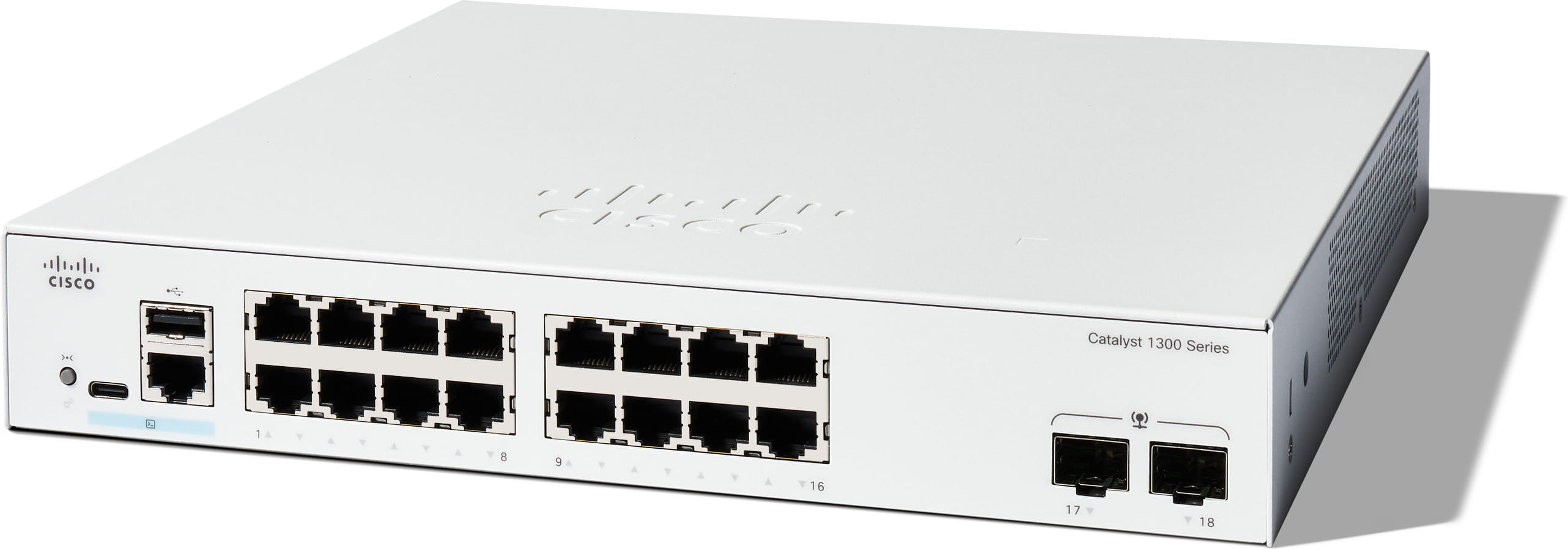
MS210-24 provides 24 Gigabit copper ports without PoE, four 1Gb SFP interfaces and dedicated stacking connections. Cisco identifies the non-PoE 24-port model as fanless. That combination can remain useful near occupied space where a conventional fan-cooled closet switch is undesirable.
The quiet chassis does not make it an industrial device or an unlimited expansion platform. The cabling location, ambient conditions and access for replacement still matter. Its value is specific: a modest data-only edge that benefits from a physical stack and the established Meraki management process.
Mixed stacking can address the uplink limit
MS210 and MS225 are a supported mixed-stack combination, unlike a general mix of arbitrary MS families. An MS225 member can provide 10Gb upstream connectivity for devices attached to the MS210 members. That can preserve useful access equipment while improving the exit from the group.
It can also concentrate the improvement in one chassis. In a published design discussion, engineers identified the single MS225 in a larger MS210 group as the remaining dependency for the faster uplinks. Cartennas would check the surviving path after that member fails. A stack with several functioning access members can still lose the upstream service the business needs.
Limited routing requires a deliberate service design
The MS210 supports a small static-routing role and DHCP relay; it does not provide the same routing and DHCP-server feature set as an MS250. The practical question is where client gateways, address allocation and firewall policy should live.
An operator discussing MS210/MS225 routing initially worked through DHCP relay to an upstream MX, then reported abandoning the design because client reporting did not meet the organization's needs. The lesson is not that static routing cannot work. It is that moving a gateway changes the information available to the rest of the operating system. Evaluate policy and client visibility along with packet forwarding before relocating those gateways.
The old redundant-power accessory is not a current expansion promise
MS210 uses fixed internal power with an external RPS interface. Cisco's data sheet notes that the required RPS2300 reached end of sale on May 31, 2023 without a replacement product. An accessory socket on the chassis therefore should not be treated as evidence that a new supported power-resilience package is readily available.
For retained equipment, document the actual power arrangement and the response to a failed supply. An existing qualified RPS setup and an unconnected RPS socket are very different conditions. If power serviceability now matters more than fanless operation, that change in priority supports replacing the switch.
Retention needs a deadline and a reason
MS210 sales ended April 30, 2026, with support listed through April 30, 2031. The sensible retention case is an installed switch that still serves its endpoint population and fits an intentional stack design. The weak case is extending the same platform indefinitely because additional used ports look inexpensive.
Prioritize replacement where the MS210's own Gigabit uplinks, lack of PoE or limited routing constrain the site. Where a mixed stack remains useful, document both its normal traffic path and its reduced-capacity state. That lets the organization retain equipment without obscuring the cost of the next refresh.
Onsite installation support
Need help installing or replacing the Cisco Meraki MS210 Series?
Cartennas provides onsite installation, replacement, rack mounting, cabling, and Smart Hands support for business network equipment across the United States.
Request Installation SupportCartennas assessment
Retain MS210-24 when quiet data access and an existing supported stack remain useful. Replace it when the site needs faster independent uplinks, powered endpoints or a more serviceable power design; plan within the April 2031 support endpoint.
Cartennas analysis of manufacturer specifications, applicable technical documentation and available firsthand operating evidence. Review methodology. Cartennas provides product procurement and onsite services. Product review terms.
Official manufacturer information
Confirm the exact model, specifications, licensing, warranty, and support terms directly with the manufacturer.
- Cisco Meraki: MS210 data sheet
- Cisco Meraki: Product lifecycle dates
- Cisco Meraki: MS switching feature and stacking FAQ
Product information was checked on September 5, 2026. Specifications, licensing, warranty, availability, and pricing can change.