This is a migration decision as much as a hardware comparison
An installed MS225 that meets its workload can remain useful without becoming the preferred platform for a new multiyear standard. Cisco lists April 30, 2026 as the MS225 end-of-sale date and April 30, 2031 as the end of support. That leaves a planning horizon for an existing deployment, but procurement availability and manufacturer support are different questions.
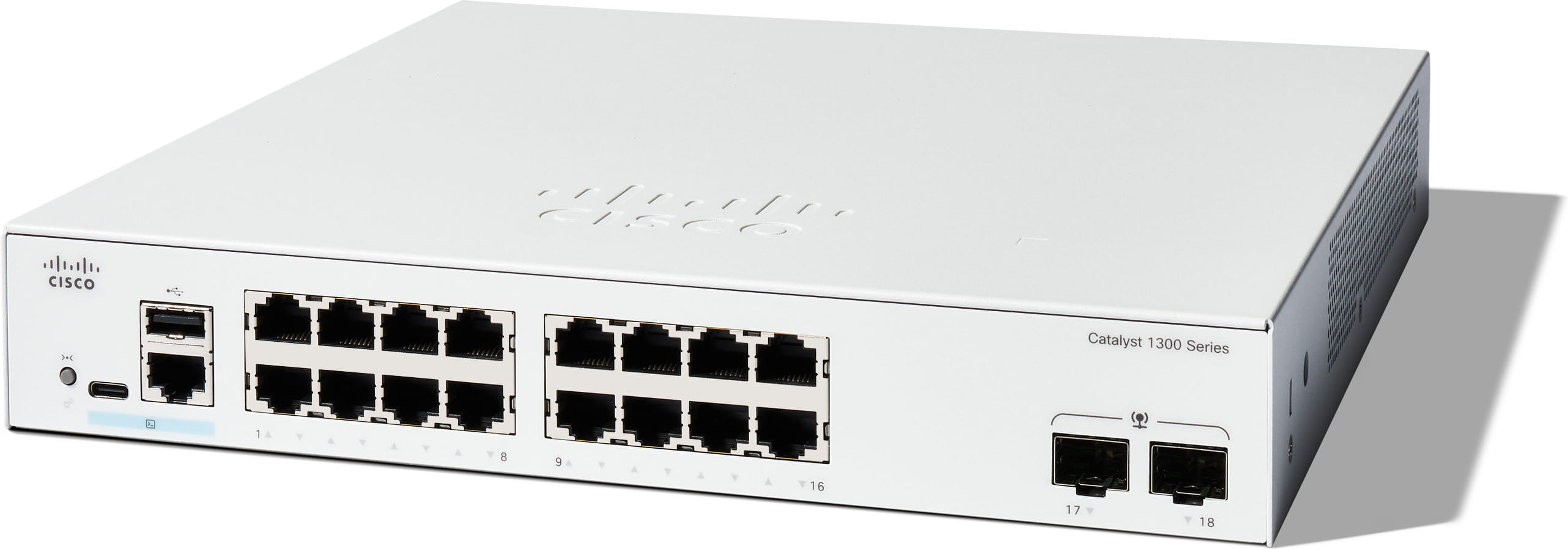
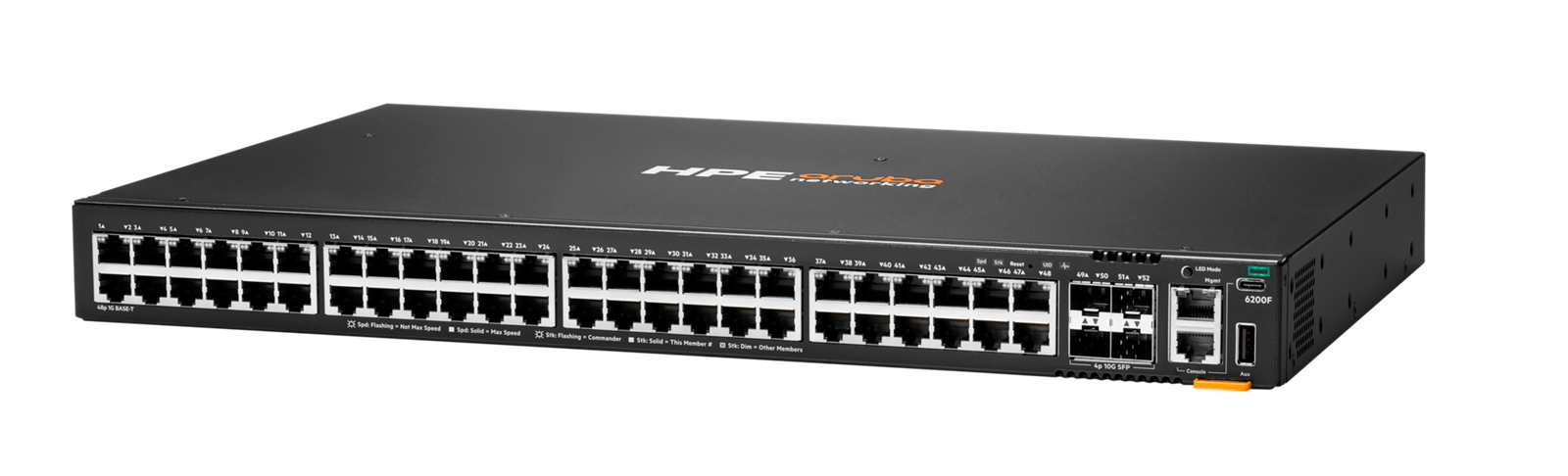
For a meaningful hardware comparison, use MS225-24 and Aruba CX 6200F JL724B: both provide 24 unpowered Gigabit copper access ports and four 10GbE-capable SFP+ uplinks. Neither supplies power to cameras or access points. A price comparison against a PoE variant would need to include its usable power budget and cooling implications rather than treating the suffix as cosmetic.
Similar uplinks, different stack wiring
The MS225 has dedicated stacking connections, leaving the four front SFP+ ports available for uplinks. The CX 6200F builds VSF using its front interfaces, so stacking consumes ports that could otherwise connect to distribution. The resulting topology, rather than the advertised family stack bandwidth, determines how much connectivity remains after a member fails.
This distinction matters in a compact closet with two distribution uplinks and little spare fiber. Draw the proposed stack and mark every physical interface before accepting the bill of materials. Include the exact transceivers or DACs. A firsthand CX 6200F troubleshooting account found retained VSF configuration on uplink ports behind a connectivity problem; restoring a clean configuration resolved it. That older report concerns the family and does not establish a defect in JL724B. That account supports checking inherited configuration, not treating the platform as incompatible with ordinary uplinks.
| Decision | MS225-24 | CX 6200F JL724B |
|---|---|---|
| Access ports | 24 Gigabit, no PoE | 24 Gigabit, no PoE |
| Uplink interfaces | Four 10GbE-capable SFP+ | Four 10GbE-capable SFP+ |
| Stack cabling | Dedicated stack interfaces | VSF consumes front interfaces |
| Cooling | Fanless selected model | Fixed fans |
| Primary fit | Retaining an existing Dashboard estate | Adopting the AOS-CX operating model |
Decide where routine authority belongs
Meraki centralizes the operational workflow in Dashboard. That is attractive when remote support needs the same interface across many buildings and the required feature set fits its model. CX 6200F offers local AOS-CX administration and can participate in an Aruba Central-managed estate. Central subscription choices and local management are therefore separate parts of the Aruba decision, while moving from Meraki also changes the team's procedures and tooling.
The routing distinction is substantive. MS225 provides a limited static-routing implementation and DHCP relay rather than a general campus routing feature set. One operator successfully configured the intended routing and relay arrangement, then abandoned it because the resulting client tracking did not meet their operational needs. A configuration that forwards packets correctly can still lose information the help desk depends on.
Serviceability is not the same as silence
The non-PoE MS225-24 is fanless. JL724B uses fixed fans and a fixed supply. Both require planning around replacement of the appliance for relevant internal hardware faults, rather than assuming a second hot-swappable supply is available. Aruba's fan-cooled chassis may be appropriate in a closet while being a poor substitution for a switch installed beside staff.
For either option, separate loss of management from loss of forwarding during the pilot. Demonstrate the credentials and physical access a technician needs when the normal remote path is unavailable. If the move to AOS-CX requires skills the support rotation does not yet have, include training and runbook work in the migration cost instead of assuming the hardware discount covers it.
Our recommendation
Retain a healthy MS225 estate when its static routing, Dashboard workflow and support horizon fit the organization's plan. Select CX 6200F when local AOS-CX control and the broader Aruba operating model solve an identified requirement, after accounting for VSF port use and management licensing. For an entirely new deployment, compare the current Meraki replacement family as well; remaining MS225 stock is not the only way to preserve the Dashboard experience.
Onsite installation support
Need help deploying the technology you select?
Cartennas provides onsite installation, replacement, rack mounting, cabling, and Smart Hands support for business network equipment across the United States.
Request Installation SupportCartennas assessment
Cartennas recommends retaining MS225 where it already fits, rather than replacing it solely for a larger feature list. For a fresh AOS-CX standard, JL724B is a practical non-PoE candidate, provided the topology and support team are designed around its actual interfaces.
Cartennas analysis of manufacturer specifications, applicable technical documentation and available firsthand operating evidence. Review methodology. Cartennas provides product procurement and onsite services. Product review terms.
Official manufacturer information
Confirm the exact model, specifications, licensing, warranty, and support terms directly with the manufacturer.
- HPE Aruba Networking: CX 6200 QuickSpecs
- Cisco Meraki: MS225 data sheet
- Cisco Meraki: Product lifecycle dates
- Cisco Meraki: MS switching feature and stacking FAQ
- HPE Aruba Networking: AOS-CX 10.13 VSF guide
Product information was checked on September 5, 2026. Specifications, licensing, warranty, availability, and pricing can change.