Product identity
Manufacturer SKU, MPN, and model information
Use the manufacturer’s SKU, MPN, model identifier, or configuration code to match the exact equipment and variant.
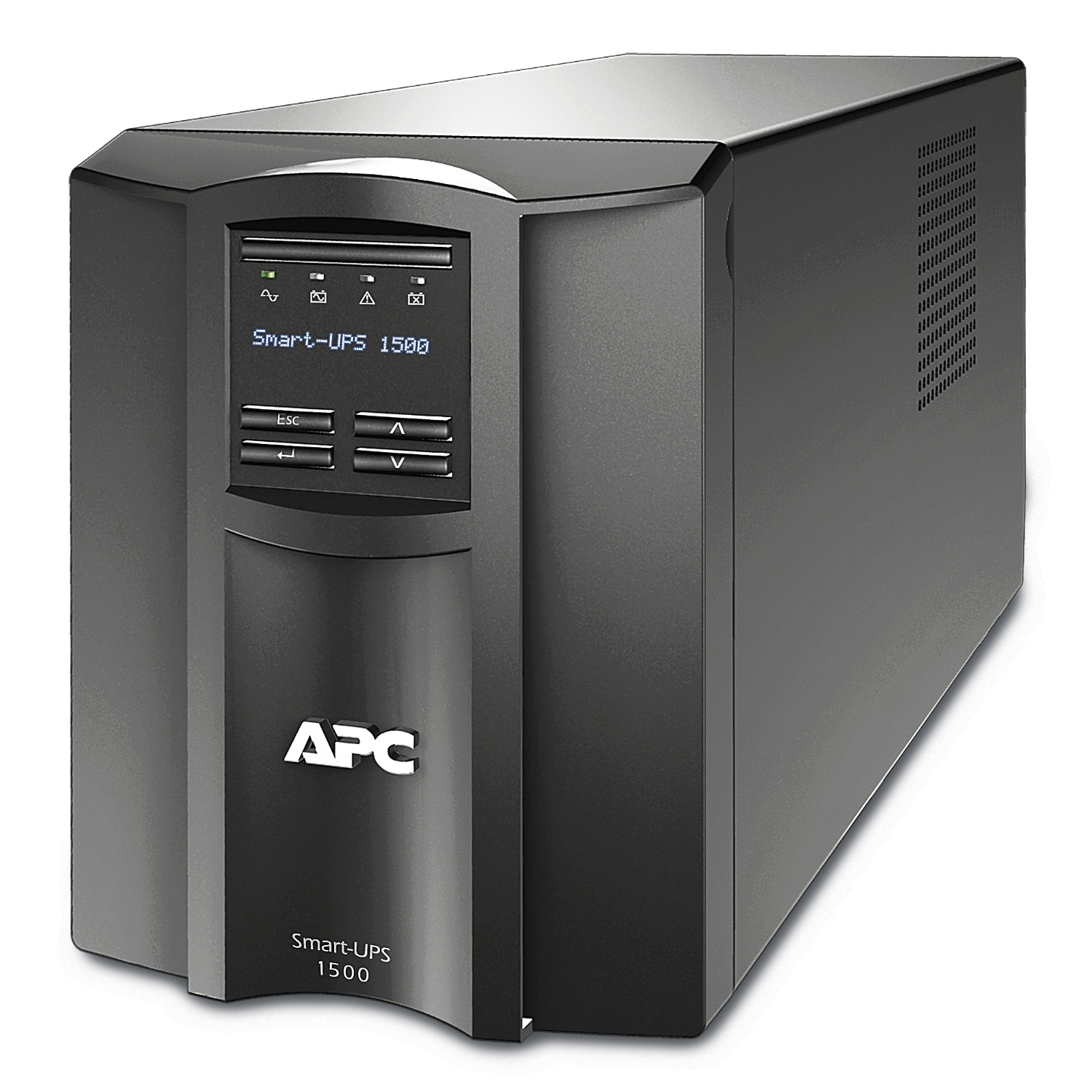
APC Smart-UPS SMT1500C
- Manufacturer identifier
- SMT1500C
- Variant
- APC Smart-UPS 1500VA tower, 120 V, SmartConnect + SmartSlot
- Region
- US
- Verified
- Official source
- Manufacturer verification
Start with the watts, then ask for minutes
Schneider Electric lists the SMT1500C at 1440 VA and 1000 W, despite the familiar 1500 model designation. It is a 120 V line-interactive tower with sine-wave output and eight NEMA 5-15R outlets. Automatic voltage regulation handles suitable input variations without requiring a battery transfer.
That rating makes it a plausible choice for a modest server or network installation, but the watt limit is not a runtime promise. A 700 W load and a 250 W load can both fit within the output rating and still require very different battery planning. The correct starting point is measured operating demand, including the devices that must remain available to complete recovery or shutdown.
Allow for what changes during the event. Fans, storage activity and a restart can differ from an idle reading. A design that fits only the normal idle state leaves little confidence that the UPS can support the workload when the system is busiest.
The Ethernet port does not settle the management design
The built-in SmartConnect port provides cloud connectivity. The separate SmartSlot accepts an optional network-management card, while USB or serial connections can support PowerChute Serial Shutdown. Schneider's documentation distinguishes these paths because they address different needs.
SmartConnect is useful when a support team wants to see power events and battery status across remote sites. Current service options also include remote outlet-group reboot on the Advanced plan. That makes it more capable than an old description of a read-only portal, but a power-cycle command still does not close applications or flush storage safely.
For a server installation, decide which component detects the power event and tells each operating system to stop. A single attached host, several physical servers and a virtualized cluster are different shutdown designs. Network shutdown can also require a compatible management card, software and licensing. Those costs belong in the purchase comparison.
Independent evidence supports the family, with limits
A 2017 firsthand test of the earlier SMT1500 reported clean sine-wave output and useful battery performance. It also measured a spread in transfer times and encountered initial difficulty getting the then-current PowerChute software to recognize the UPS. The sample was provided by APC.
That is relevant background for the product family, but it is not a controlled test of the SMT1500C or today's software. Cartennas would not borrow the earlier model's runtime chart or software problem and present either as a current exact-model result.
The practical lesson is to commission both the power path and the control path. The UPS can sustain output while a server fails to receive a shutdown signal. Equally, a successful software installation says nothing about how long a particular battery will support the connected equipment.
A complete power event includes the return of power
Choose a shutdown trigger that leaves enough time for the slowest protected dependency. Storage may need to remain available until applications and hosts have stopped. A network switch carrying management traffic may also need to stay powered during that sequence. Cutting its power first can strand otherwise healthy shutdown software.
Then consider restoration. Starting everything immediately after a brief return of utility power can expose the systems to another interruption before the battery has recovered. The restart sequence should account for the site's actual power behavior and the applications' dependencies.
This is why we favor a measured commissioning record over a nominal runtime claim. Record the load, available battery runtime, shutdown completion and restart behavior. That record provides a baseline for later battery-health decisions and makes a replacement easier to assess.
Where Cartennas would use it
We would choose the SMT1500C where the tower format works, the load has comfortable room below 1000 W, and the organization has a clear shutdown and support arrangement. Its cloud visibility can add value at unattended sites, provided the network path survives long enough to report the event.
For a growing rack or a requirement to operate through a long outage, compare units with a higher output ceiling or a documented external-battery path. Buying additional VA in the product name without checking watts and battery capacity is not an adequate upgrade decision.
The support arrangement should also separate a communication problem from an output problem. Schneider documents a way to restart the SmartConnect communications interface without interrupting the attached load. Knowing that distinction can prevent an unnecessary power interruption during remote troubleshooting.
Onsite installation support
Need help installing or replacing the Smart-UPS SMT1500C?
Cartennas provides onsite installation, replacement, rack mounting, cabling, and Smart Hands support for business power and infrastructure equipment across the United States.
Request Installation SupportCartennas assessment
The SMT1500C is a sound candidate for modest protected loads when monitoring and graceful shutdown are designed separately. Compare its 1000 W ceiling and load-specific runtime with the complete operating requirement.
Cartennas evaluation of exact-model manufacturer data, management requirements and the scope of available firsthand evidence. Review methodology. Cartennas provides product procurement and onsite services. Product review terms.
Official manufacturer information
Confirm the exact model, specifications, licensing, warranty, and support terms directly with the manufacturer.
- Schneider Electric: SMT1500C US product information
- Schneider Electric: Network Management Card versus SmartConnect
- Schneider Electric: SmartConnect Advanced plan
- Schneider Electric: Restarting SmartConnect communications
Product information was checked on September 5, 2026. Specifications, licensing, warranty, availability, and pricing can change.