Product identity
Manufacturer SKU, MPN, and model information
Use the manufacturer’s SKU, MPN, model identifier, or configuration code to match the exact equipment and variant.
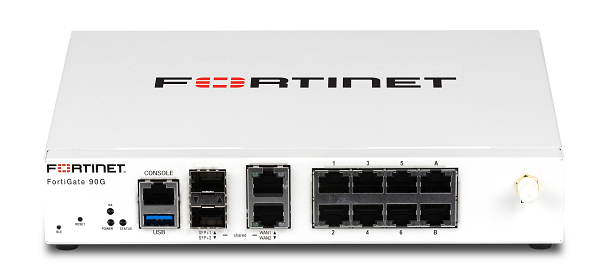
Fortinet FortiGate 90G
- Manufacturer identifier
- FG-90G
- Variant
- FortiGate 90G base appliance model
- Region
- Global
- Verified
- Official source
- Manufacturer verification
Sophos XGS 128 Gen 2
- Manufacturer identifier
- XGS 128
- Variant
- Gen.2 wired appliance model identifier
- Region
- Global
- Verified
- Official source
- Manufacturer verification
Begin with the traffic the firewall must inspect
Basic firewall forwarding is a poor sizing metric for a branch that will decrypt traffic, identify applications and apply threat controls. The useful workload includes the services that will remain enabled in production, along with the number and behavior of concurrent sessions.
Fortinet publishes separate threat-protection and SSL-inspection figures for the 90G. Sophos separately publishes firewall and TLS-inspection results for the XGS 128 Gen 2. The labels and test methods differ, so placing the largest numbers in one column creates a misleading comparison.
Cartennas would compare the same intended traffic policy on a workload-sized configuration. If encrypted traffic dominates the branch, a bare firewall number can obscure the capacity that matters most.
Interfaces and architecture change the installation
The 90G is the more natural candidate when the physical design requires its 10G interfaces. Those shared-media pairs are not four independent 10G ports. The XGS 128's copper layout may fit a different branch without requiring the same media or adapters.
Neither interface arrangement establishes the speed of a fully inspected application. A faster socket is useful only when the appliance and policy can sustain the required workload through it.
| Question | FortiGate 90G | XGS 128 Gen 2 |
|---|---|---|
| Faster physical links | Two 10G shared-media pairs | Nine 2.5GbE copper interfaces and an SFP interface |
| Port-count trap | Shared media are alternative connections | Do not substitute another XGS model's interfaces |
| Hardware distinction | 90G versus storage-equipped 91G | 128 single-CPU virtual FastPath versus 138 architecture |
| Quote requirement | Correct logging and subscription design | Correct model, options and subscription design |
Remote access can decide the software path
FortiOS changes have removed SSL-VPN tunnel mode from the relevant newer release path. An older 90G datasheet's SSL-VPN performance figure therefore should not be treated as a durable promise that the same workflow exists in every current release.
An organization depending on that workflow needs a supported migration design, including client software, authentication and access policy. Buying the appliance first and discovering the remote-access change during deployment can turn an ordinary refresh into a separate user migration.
The Sophos alternative should receive the same scrutiny for the actual remote-access and identity design. Brand familiarity does not replace validation of the chosen release and client combination.
Operator reports are most useful when they expose acceptance gaps
90G owners have described stable deployments on particular older FortiOS releases, including routing and overlay use. Those reports show that real configurations can work well; they do not certify an arbitrary later release or another site's policy.
A May 2026 XGS 128 report described cloud-voice problems that disappeared on a direct upstream connection. The discussion did not establish a root cause. It is a reason to exercise call setup, media and reconnect behavior through the intended policy, not evidence that the hardware cannot support voice.
The comparison should therefore include application behavior under protection. A fast download through either firewall leaves important questions unanswered if calls fail, remote sessions cannot reconnect or authentication behaves differently after failover.
Choose the appliance the team can operate successfully
Favor the 90G when its interfaces and Fortinet integration fit the branch, with a supported remote-access design and suitable logging. Favor the XGS 128 Gen 2 when its interface layout and Sophos operating environment better match the application and support requirements.
On either side, include subscriptions, administrative effort and the recovery path in the delivered cost. A slightly lower hardware quote loses its advantage quickly if the support team cannot diagnose policy behavior or restore the site predictably.
The final decision should come from a protected-workload pilot with the important applications. That produces a stronger recommendation than declaring a winner from incomparable marketing throughput figures.
Onsite installation support
Need help deploying the technology you select?
Cartennas provides onsite installation, replacement, rack mounting, cabling, and Smart Hands support for business security and firewall equipment across the United States.
Request Installation SupportCartennas assessment
Choose the 90G or XGS 128 Gen 2 according to protected application demand, physical interfaces and operating fit. Resolve software-dependent remote access before purchase, and test voice, authentication and recovery as part of capacity qualification.
Cartennas comparison of exact configurations, manufacturer documentation and available firsthand evidence; unmatched tests are not treated as a controlled ranking. Review methodology. Cartennas provides product procurement and onsite services. Product review terms.
Official manufacturer information
Confirm the exact model, specifications, licensing, warranty, and support terms directly with the manufacturer.
- Fortinet: Fortinet product matrix
- Fortinet: NGFW ordering guide
- Fortinet: SSL-VPN to IPsec migration introduction
- Sophos: Second-generation XGS desktop specifications and methodology
Product information was checked on September 5, 2026. Specifications, licensing, warranty, availability, and pricing can change.