
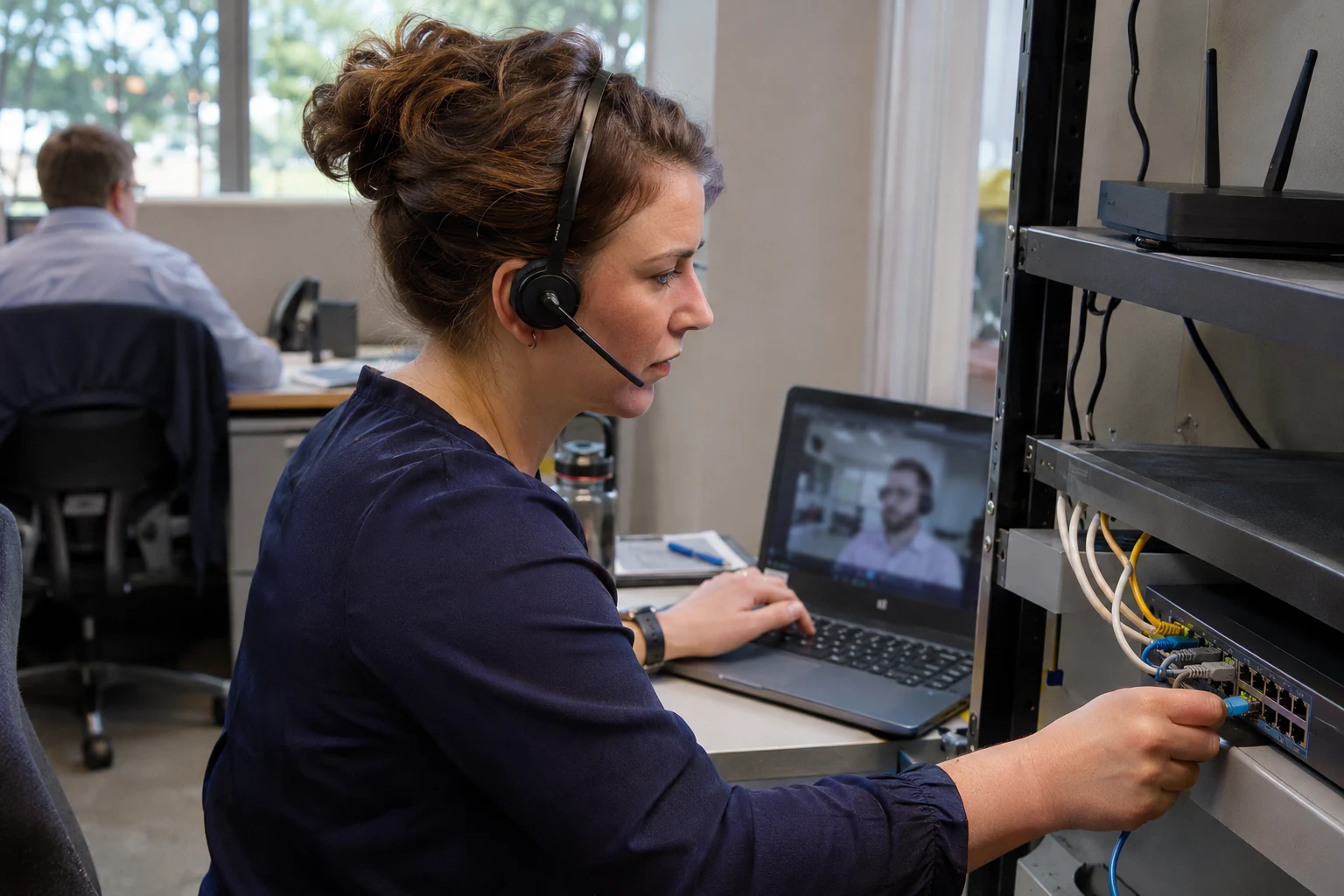
The useful distinction is the work you need performed. A local technician may be well suited to a guided hardware swap, while an unfamiliar network fault may require a different level of expertise. Location alone does not establish capability.
You can keep your current IT relationship
Bringing in onsite help does not have to mean replacing your remote provider. Agree which team is making technical decisions and which tasks the person at the location will perform. That division can be as simple as your engineer identifying a device and the technician checking or replacing it.
Get both sides ready for the same appointment
The technician needs the location, access instructions, equipment details, and a description of the physical task. The remote contact needs the visit window and a way to communicate with the technician. If replacement equipment is required, confirm it is at the site and has the necessary accessories.
Keep changes authorized
A request to inspect a connection is different from permission to reset a firewall or alter a network. Identify who can approve changes, provide necessary access through your approved process, and decide how an unexpected finding will be handled. Avoid relying on an available employee to make technical decisions outside their role.
Finish with a shared result
Ask the remote team to validate the relevant function before the visit closes. A device can be powered on and still not be doing the job it was installed for. Record what was checked, what changed, and anything that needs follow-up. Cartennas can provide the onsite execution within that coordinated plan.
Answers grounded in the work businesses need done onsite.