
Cartennas
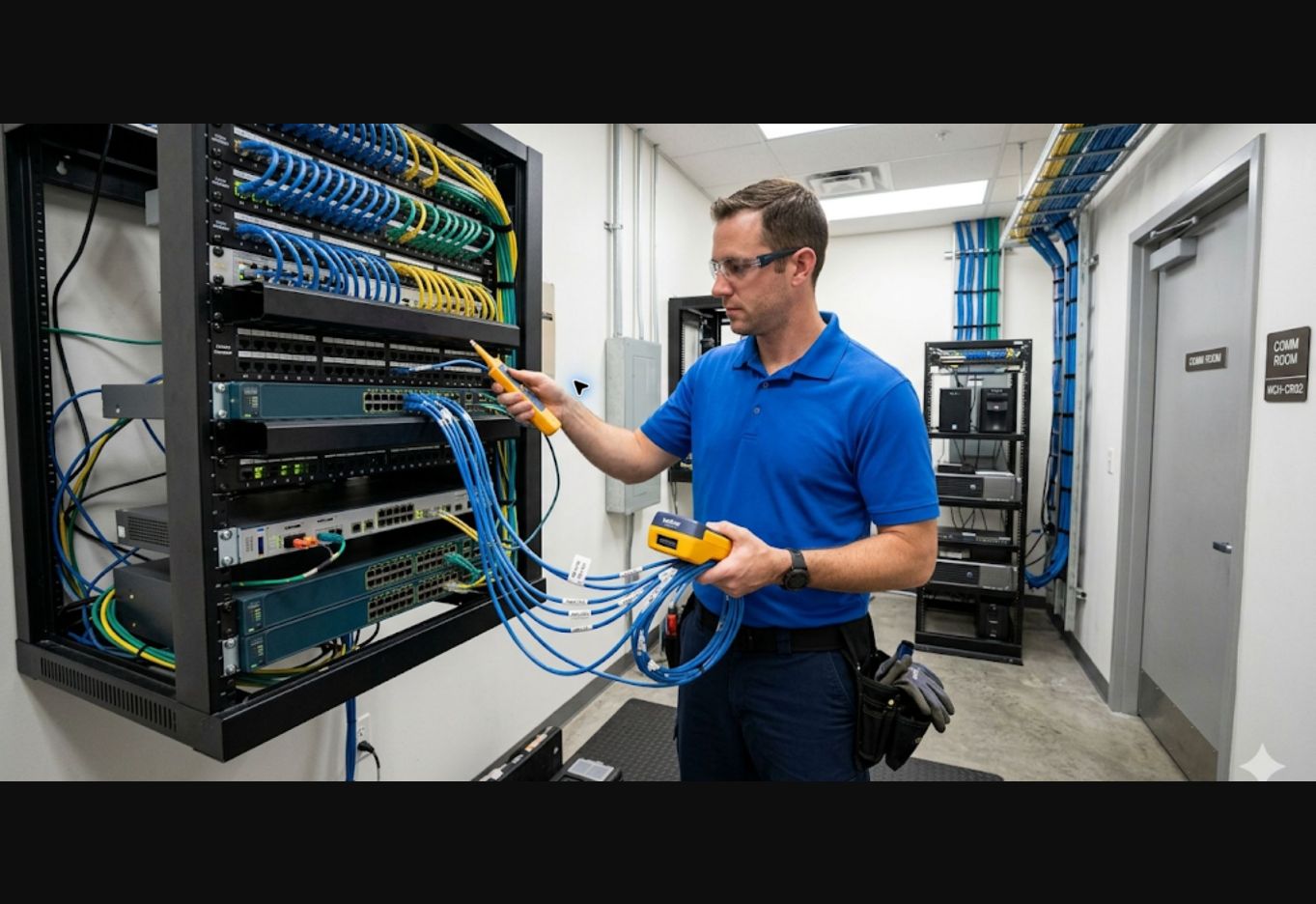
Cartennas technician supporting telecommunications and network equipment at a field site

Telecommunications industry

Telecommunications Smart Hands and onsite field support

Cartennas helps telecommunications companies complete onsite technical work across distributed sites with Smart Hands, network equipment support, site turn-ups, hardware swaps, structured cabling, troubleshooting, and rollout execution.

  • Smart Hands
  • Network equipment
  • Site turn-ups
  • Hardware swaps
  • Structured cabling
  • Rollout execution

Industry overview

Onsite IT support for telecommunications smart hands and environments

Telecommunications support is not the same as general office IT. Telecom teams need onsite execution around distributed infrastructure, customer locations, equipment rooms, MDF and IDF spaces, site activations, hardware replacement, and remote-engineer-directed work.

Remote support is important, but equipment may still need to be racked, patched, labeled, power-cycled, replaced, tested, or visually verified. A remote engineer may need qualified onsite assistance during a turn-up, cutover, inspection, or troubleshooting task.

Cartennas gives telecommunications organizations a practical way to complete onsite work across one market or many without relying on fragmented local coverage or expanding internal field headcount everywhere demand appears.

Telecommunications environments supported

  • Customer locations
  • Branch and regional offices
  • MDF and IDF rooms
  • Equipment rooms and network closets
  • Distributed technical sites
  • Multi-site network environments

Typical onsite telecom tasks

  • Router, switch, firewall, and edge-device installs or swaps
  • Rack and stack work
  • Cable tracing, patching, and labeling
  • Port testing and visual verification
  • Smart Hands under remote direction
  • Troubleshooting, break/fix, and rollout execution

Onsite support capabilities

What Cartennas supports for telecommunications companies

Cartennas provides the onsite execution layer for telecommunications equipment, connectivity work, customer sites, and distributed network programs.

Smart Hands for remote engineering teams

Complete cable tracing, port testing, visual checks, power cycling, labeling, patching, and technician-directed troubleshooting.

Network equipment installs and swaps

Install, replace, mount, connect, and verify routers, switches, firewalls, wireless hardware, modems, and edge devices.

Site turn-ups, refreshes, and rollouts

Support activations, upgrades, replacements, standardization, relocations, and multi-site programs under an approved scope.

Structured cabling and site work

Perform approved patching, labeling, tracing, cable placement, and related infrastructure tasks at the technical site.

Troubleshooting and verification

Provide onsite eyes and hands for equipment checks, connectivity investigation, indicator status, and hardware validation.

White-label field support

Provide approved onsite execution for telecommunications providers, integrators, and other service organizations under defined customer-interaction requirements.

Common onsite work

Common telecommunications use cases

  • Router, switch, firewall, and edge appliance swaps
  • Rack and stack tasks
  • Cable tracing and patch verification
  • Port testing and hardware validation
  • Smart Hands under remote engineer direction
  • Structured cabling support
  • Hardware replacement and break/fix dispatches
  • Site readiness before activations or upgrades
  • Turn-ups, refreshes, and multi-site rollouts
  • White-label field delivery

Why Cartennas

Why telecommunications teams use Cartennas

Extend field reach

Add onsite execution across a wider footprint without staffing every market where work may arise.

Support centralized engineering

Keep technical ownership with remote engineering while qualified technicians complete approved tasks at the location.

Reduce fragmented local coverage

Use a consistent service model for break/fix, scheduled work, Smart Hands, and rollout activity across distributed sites.

Frequently asked questions

Questions about telecommunications smart hands and onsite field support

Final availability, timing, and pricing depend on the location, approved scope, access, equipment, and service requirements.

What onsite IT work does Cartennas support for telecommunications operations?

Typical work includes troubleshooting, installations, device swaps, Smart Hands, network equipment support, cabling, and project activity involving routers, switches, firewalls, edge appliances, modems, wireless equipment, racks, patch panels, and cabling.

Can Cartennas support both a single location and a national footprint?

Yes. Customers can request work at one site or coordinate approved service across regional and nationwide locations through the same service organization.

Can service be planned around operating hours and site access rules?

Yes. Include the service window, access requirements, escort rules, onsite contact, and any location-specific restrictions with the request so the visit can be planned correctly.

Can Cartennas work with our internal IT team or managed service provider?

Yes. Cartennas provides onsite IT support while the customer or authorized technology partner retains technical ownership, standards, and remote direction.

Start a conversation

A practical onsite support model for telecommunications companies

Whether you need Smart Hands for remote engineering, onsite network equipment support, help with site turn-ups and swaps, or a field partner for distributed rollouts, Cartennas helps complete the approved work where the network is.

Discuss your locations, equipment, maintenance windows, remote contacts, and required completion evidence with the Cartennas team.