Product identity
Manufacturer SKU, MPN, and model information
Use the manufacturer’s SKU, MPN, model identifier, or configuration code to match the exact equipment and variant.
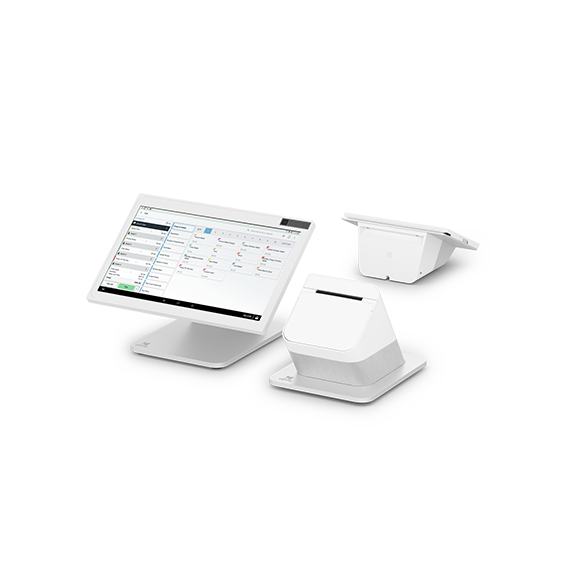
Square Register 2nd Generation
- Manufacturer identifier
- A-SKU-0908
- Variant
- Square Register (2nd generation)
- Region
- US
- Verified
- Official source
- Manufacturer verification
The purchase begins with the transaction
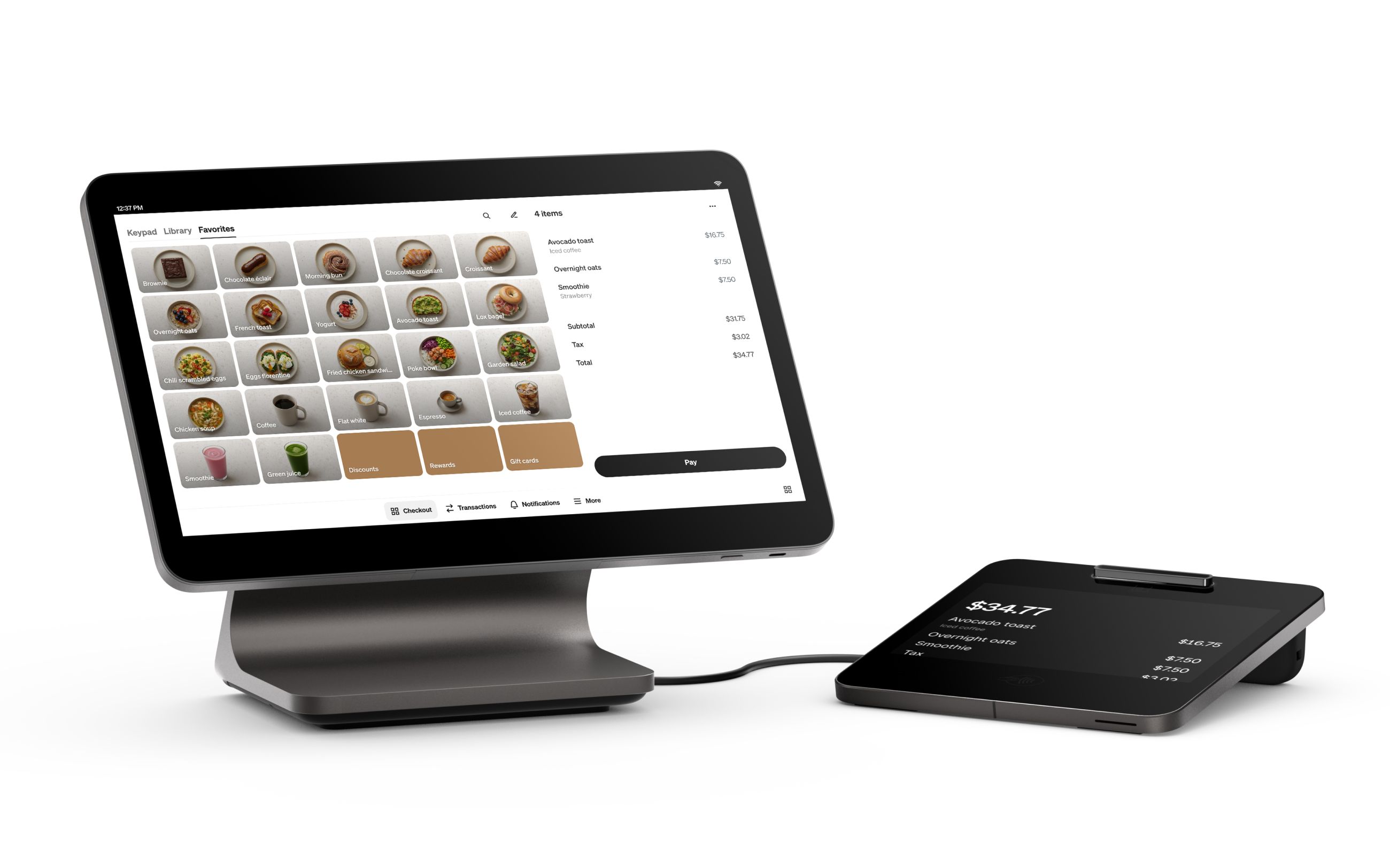
Cartennas would choose Register for a business that wants a dedicated Square checkout station and has confirmed that its staff can complete the important transactions efficiently. The two-screen arrangement lets the employee manage the sale while the customer reviews and pays. That is a practical improvement over repeatedly turning one shared screen between people.
The best evaluation uses the business's own catalog. A simple fixed-price item, a sale by custom quantity, a return and a complicated order can expose very different behavior. A polished demonstration with a few ordinary products does not establish that the software fits a business whose exceptions occur throughout the day.
What the second generation actually changes
Square launched the refreshed hardware in February 2026 and attributes up to 40% faster performance to improvements in launching, loading and navigation. Its current product information lists 8GB of RAM, 128GB of flash storage and processing speeds up to 2.7GHz. These are manufacturer specifications and claims, not an independent checkout-time benchmark.
The distinction matters because a transaction includes more than local processing. Staff entry, customer decisions, card communication and remote authorization can all consume time. Reducing interface delay can help a busy counter without making the complete sale 40% shorter.
Cartennas would therefore look for a measured problem the refresh solves. If staff wait for screens to load during every sale, more responsive hardware can be valuable. If they spend that time navigating an unsuitable item workflow, a hardware replacement addresses a smaller part of the delay.
Owner feedback points to software fit
In Square's launch discussion, a merchant described an earlier Register workflow that required several extra steps to enter quantities for a custom unit. The merchant used an iPad-based Square Stand instead. Square's representative acknowledged the feedback and passed it to the product team; the exchange did not demonstrate a tested fix on the second-generation Register.
That is an operating requirement worth carrying into a purchase, not evidence that the new hardware is defective. Another owner raised confusing card-removal messaging on a first-generation unit. Both reports show how small interface details can affect a line of customers. They should inform the acceptance transaction without being converted into a reliability score for a different generation.
The payment hardware has a concrete difference
Second-generation Register accepts contactless and chip payments directly. Square's setup and troubleshooting guidance specifies a separate USB-C magnetic-stripe reader for swipe transactions. An older Register accessory assumption can therefore leave a counter unable to handle a payment method it expects to use.
The useful question is how often that method or accessory appears in the business's real transactions. A store using a particular gift-card or peripheral workflow needs to qualify it explicitly. The extra device also occupies space and a connection, which matters at a crowded counter even if its purchase price is small.
Durability and power solve different problems
The enclosure carries an IP54 rating for dust and splashes. Square also requires the Register to remain connected to power. Those facts support a fixed-counter role; they do not make it a battery-operated terminal or justify exposing it to washdown conditions.
The customer display can be placed separately using the appropriate cable. That flexibility is useful at a deep counter or a service window, provided the customer can reach the payment area and the cable is protected from repeated strain. Physical placement should be assessed with an employee and a customer using the station, rather than from a photograph of the hardware.
Offline capture is a limited continuity function
Square stores supported offline payments for processing after connectivity returns. The merchant remains responsible for payments that later expire, decline or are disputed. Some methods, including Square Gift Cards, EBT/SNAP and Cash App Pay, are unavailable offline. Keeping a checkout screen active is therefore different from preserving every normal transaction.
Square's Register product guidance tells operators to reconnect within 24 hours. Cartennas would use prompt reconnection and upload as the operating target, then reconcile pending and failed payments. Staff should know which functions remain usable and avoid actions that erase the local queue while a connectivity problem is being investigated.
A backup internet path can reduce dependence on offline operation, but a local network repair and a Square service disruption are different events. The continuity decision should follow the actual failure, with an identified person responsible for restoring connectivity and checking the resulting payments.
Judge the complete Square configuration
The hardware is one part of the cost. Software features, payment processing and supported accessories determine whether the complete system fits the counter. A low hardware payment spread over time does not, by itself, establish a low total operating cost.
Cartennas would compare the intended plan and transaction pattern with alternatives, using the same required features in each comparison. Register is most convincing when that complete package works well and the dedicated hardware improves a busy, permanent checkout position.
Onsite installation support
Need help installing or replacing the Square Register (2nd generation)?
Cartennas provides onsite installation, replacement, peripheral setup, cabling, and Smart Hands support for point-of-sale technology across the United States.
Request Installation SupportCartennas assessment
The second-generation Register is a sensible Square countertop upgrade when local responsiveness and durability matter. Its approval should follow a successful demonstration of the business's actual item, payment and exception workflows. Buy the faster hardware to remove a measured hardware constraint; confirm separately that the software does the job.
Cartennas analysis of manufacturer documentation and published merchant and technician reports. Hardware-generation and workflow limits are identified in the review. Review methodology. Cartennas provides product procurement and onsite services. Product review terms.
Official manufacturer information
Confirm the exact model, specifications, licensing, warranty, and support terms directly with the manufacturer.
- Square: Second-generation Register launch
- Square: Register product overview
- Square: Register technical specifications
- Square: Set up second-generation Register
- Square: Offline payment operation
Product information was checked on September 5, 2026. Specifications, licensing, warranty, availability, and pricing can change.