
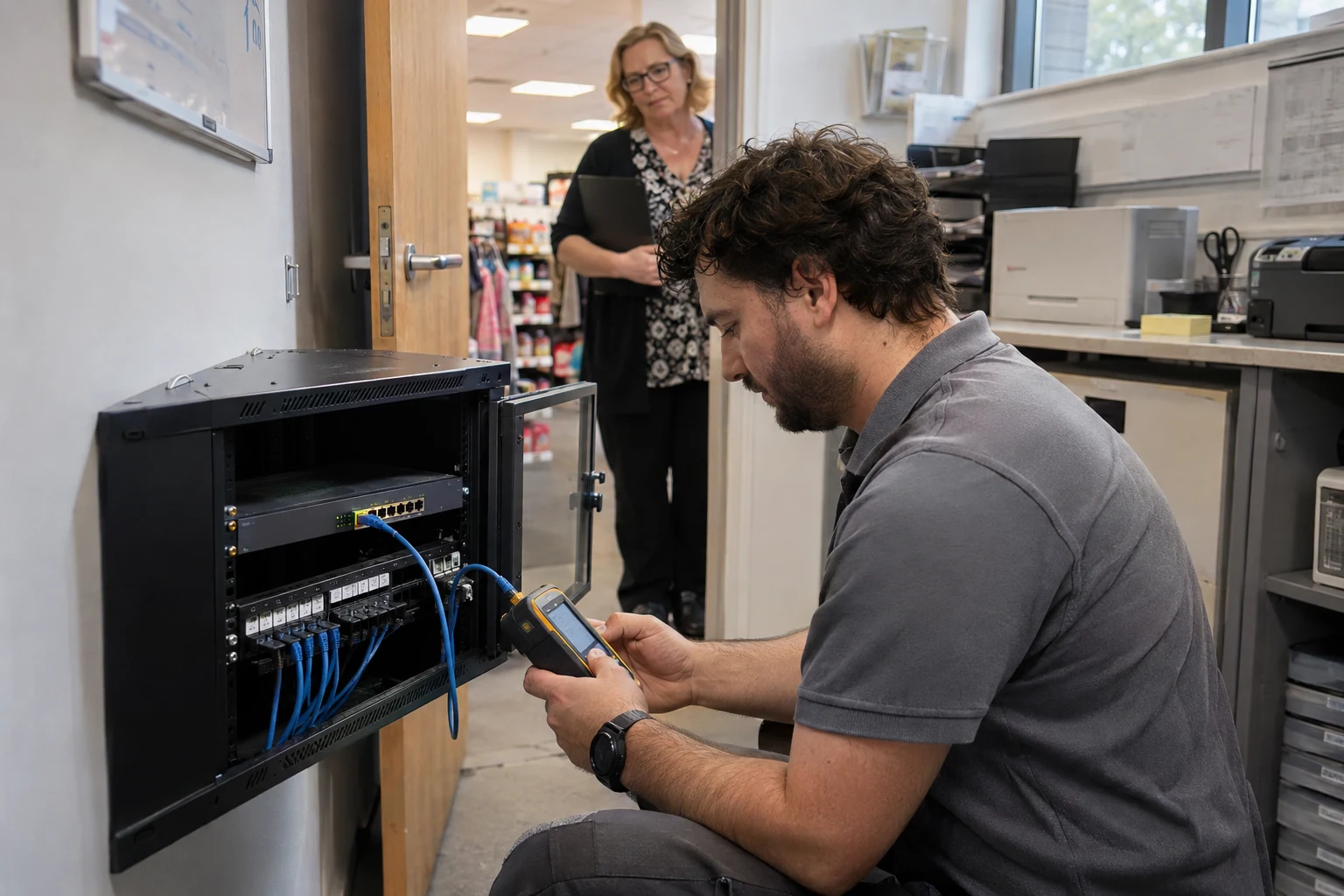
Supporting customers across the country creates a practical problem when someone must reach a cable, printer, or failed device. Remote diagnosis helps identify the assignment, but a reliable emergency process also needs local access and a technician with the right skills.
Prepare coverage before an outage
Give the field provider your location list, operating hours, access restrictions, and common equipment. Agree who can request dispatch and authorize extra work. Check how rural addresses and overnight requests are handled instead of assuming every site has the same service window.
Triage the business impact
State whether the entire site is stopped or one workstation is affected. Share the remote team’s findings, the equipment involved, and the required physical checks. This lets dispatch match the assignment to available skills and avoids repeating diagnosis without a plan.
Confirm the actual visit
Get an arrival window for that address and identify the onsite contact. Confirm that replacement equipment is available when a swap is required. A technician can investigate an outage while a carrier or equipment vendor handles a separate dependency, so agree how escalation will work.
Close with the remote team
Keep the authorized engineer reachable during the visit. Test the affected business function, record the work and any remaining issue, and assign the next action before closing. Cartennas provides the onsite execution within that coordinated process.
Answers grounded in the work businesses need done onsite.